The dimensional data of American beech trees in changing climates: environmental data science meets digital art installations in public space
By Blandine Courcot, Gisèle Trudel and Marc-André Cossette, 19 February 2026
Revised manuscript
Climate change is undoubtedly one of the greatest challenges for humanity to address. The IPCC synthesis report (2023) provides guidance; yet the constant barrage of adverse impacts seems to paralyze citizens who recoil from taking action under the pressure of constant and rapidly approaching “tipping points”, thresholds between two states. In this article, we explore thresholds through the lens of what we call “dimensional data”, understood here as both a measurement and a quality of this particular data. Data were collected in the academic research site of a forest near Tiohtià:ke/Mooniyang/Montreal (Quebec, Canada). They show the resilience of another living being, the American beech tree (Fagus grandifolia). Comparing different species, analysis highlights how American beech trees can sustain repeated short but intense periods of drought. The article is grounded in Courcot’s research and its numerical approach is extended publicly in a distinct immersive outdoor art installation. It is the third in a series of four in situ artworks produced by MÉDIANE, the Canada Research Chair in Arts, Ecotechnologies of Practice and Climate Change (2020-2025), led by artist and professor Gisèle Trudel (University of Quebec at Montreal, UQAM). MÉDIANE’s main mission is to collaborate with scientists at Smartforests Canada (led by professor and forest ecologist Daniel Kneeshaw at University of Quebec at Montreal (UQAM) and at DOT-Lab, the environmental data lab directed by professor and forest ecologist Nicolas Bélanger at TÉLUQ University (Montreal, Canada). The goal is to bring forest, tree and soil scientific sensor research about climate change into outdoor art exhibitions, in order to create dialogues between artists, scientists and publics. In this instance, American beech tree thresholds are expressed through an art-science collaboration and digital art creativity. From soil water potential and soil temperature sensors compiled from 2017 to 2020, the data reveal the tree’s own dimensional relations to its environment in the dynamic visualizations of the artwork entitled "Beech-Becoming", presented in a rural forest in May 2023.
{1}An exploration of the dimensional aspect of data, understood as both a physical measurement and a quality of a thing or situation, this text is narrated by a scientist and two artists. We begin with an incursion into Courcot’s climate research about soil water potential, soil temperature and flash droughts of American beech trees (Fagus grandifolia) based on data captured with sensors in environmental science. Thanks to the recommendation of Nicolas Bélanger, director of DOT-Lab, one of MÉDIANE’s forest ecology partners, Courcot’s research is the source of the production of the artwork entitled Beech-Becoming (2023), the third outdoor installation of MÉDIANE, the Canada Research Chair in Arts, Ecotechnologies of Practice and Climate Change (2020-2025). The second part presents the artistic renderings of Courcot’s American beech tree research along with weather data in special generative software, producing evocative visualizations of data thresholds in the artwork. The third segment gives the larger context of this artwork within MÉDIANE, which also serves to conduct semi-directed interviews with publics [MEDIANE, 2023]. An overview of responses to one of the seven questions will be discussed. It reads as follows: “In what ways can artists, scientists and publics work together to think and act differently about climate change?”, pointing to the importance of art/science collaborations and public outreach. [MEDIANE, 2023].
{2}Dimensions of American beech’s soil water potential, soil temperature and flash droughts within environmental data and science
{3}In this context of global climate change, a question remains central in forest ecology: What will be forests’ spatiotemporal evolution in a future new climate normal? And what can an art/science collaboration contribute to this question?
{4}We wondered what would happen in a future climate normality of a sugar maple forest near the northern distribution limit of temperate deciduous forests in Quebec (Canada) where different species such as birch and beech trees live together. Focusing on the temporal evolution of the soil water potential of all these diverse species, my research in the DOT-Lab, with Pr Daniel Lemire and Pr Nicolas Bélanger, has evolved at the interface between data science and environmental science [DOT-Lab, 2023]. I have contributed to the text as the scientist involved in the art-science collaboration presently discussed.
{5}Considering this shift towards a “new normal”, it seems necessary to clarify the concepts of trends and extreme events. Studying the influence of local parameters has become a central issue, and this is especially true in a globally changing hydroclimatic context where extreme events are indeed more likely, more intense, and longer-lasting [D. Herring, 2020]. However, considering droughts, it has become more challenging to define correctly such an event in a situation where the current baseline is shifting [S. Stevenson et al., 2022].
{6}Each tree species reacts specifically to extreme events depending on its capacity to resist change, i.e., its degree of resilience [C. Holling, 1996]. For example, some trees can experience embolism due to hydraulic failure. An analogy can be used here to clarify the concept of resilience in ecology. Think of a ball rolling on a landscape of hills. This ball can be stable and stand in a basin between two hills. If a slight disturbance is enough to move the ball over the hill to another basin, it has a low resilience because its capacity to resist change is small.
{7}Water deprivation for trees is a form of disturbance, and Kögler and Söffker have defined several levels of stress based on the intensity and the duration of a hydric deficit [F. Kögler and D. Söffker, 2020] (Figure 1). A stress can be positive for the tree up to a certain threshold, but after a limit, it becomes harmful and can cause death. This threshold is a tipping point, a boundary between two states; the hill’s height for the rolling ball. This example was presented to the two artists of the present project, who perceived this threshold as a pertinent orientation to follow for the production of the dynamic visualizations, to be discussed further on.
{8}The mortality process is complex, and it needs to integrate different types of interactions and dependencies between factors both internal and external to the tree [Nate G. McDowell et al., 2022]. I focus on what happens at the soil level.
{9}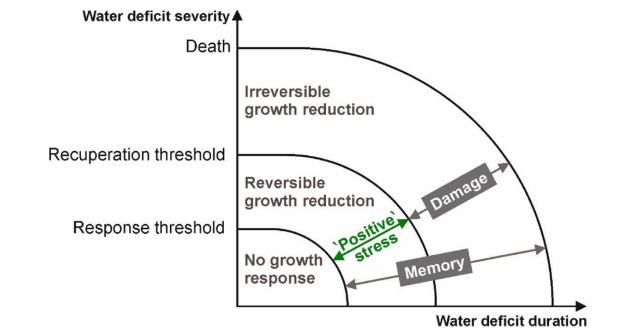
Figure 1: Reprinted from [F. Kögler and D. Söffker, 2020], Copyright (2020), with permission from Elsevier.
{10}Figure 1 can be seen as a tipping point in my dialogue with artists Trudel and Cossette. From this graph emerged the common ground of our collaboration, focusing on the American beech’s ability to adapt to flash droughts — short periods of intense hydric stress [J. A. Otkin et al., 2018]. During our discussions, we considered this moment as a teaching about resilience from the tree, to be shared with humans through artistic expression. The second band of the graph shows the new dimension of a tipping point, whereby stress can sometimes have positive effects, which is relevant for publics to know in the context of climate change.
{11}The experimental framework for my scientific study is the Pan-Canadian project Smartforests [C. Pappas et al., 2022; Smartforests, 2023], and the site located in Quebec, the Station de biologie des Laurentides (SBL) of Université de Montréal in Saint-Hippolyte (Quebec, Canada) [SBL, 2023]. The experimental field is spread over 32 stations. Each station is composed of similar trees [N. Bélanger et al., 2021]. Three main forest types were identified: mixedwoods (MW), hardwoods (HW), and hardwood-beech (HB). The American beech (Fagus grandifolia) is the dominant species of HB stands, and it is the focus of my own research within the DOT-Lab which I bring to my collaboration with the two co-authors of this text. Smartforests Canada and DOT-Lab are MÉDIANE’s main science collaborators.
{12}Each station has sensors to measure soil water potential and soil temperature. Millions of data were collected at the SBL between 2017 and 2020. Weather information was also measured, such as air temperature, soil temperature, precipitations, solar radiance, and soil water content, referred to as soil moisture [B. Courcot, 2023].
{13}Soil water potential, expressed in units of pressure [kPa], allows the characterization of trees’ ability to draw water from the soil. When the potential reaches high positive values, the tree faces hydric stress. Considering flash droughts, my study shows a different behavior of the American beech compared to balsam fir and birch trees. Indeed, at the soil level, in a beech-maple forest with a closed canopy, the American beech can regulate the soil temperature and maintain its soil water potential near lower values, as illustrated in Figure 2 and Figure 3 during the second flash drought observed in 2020 [B. Courcot et al., 2023]. This is an asset for the American beech considering the greater frequency of dry-down periods.
{14}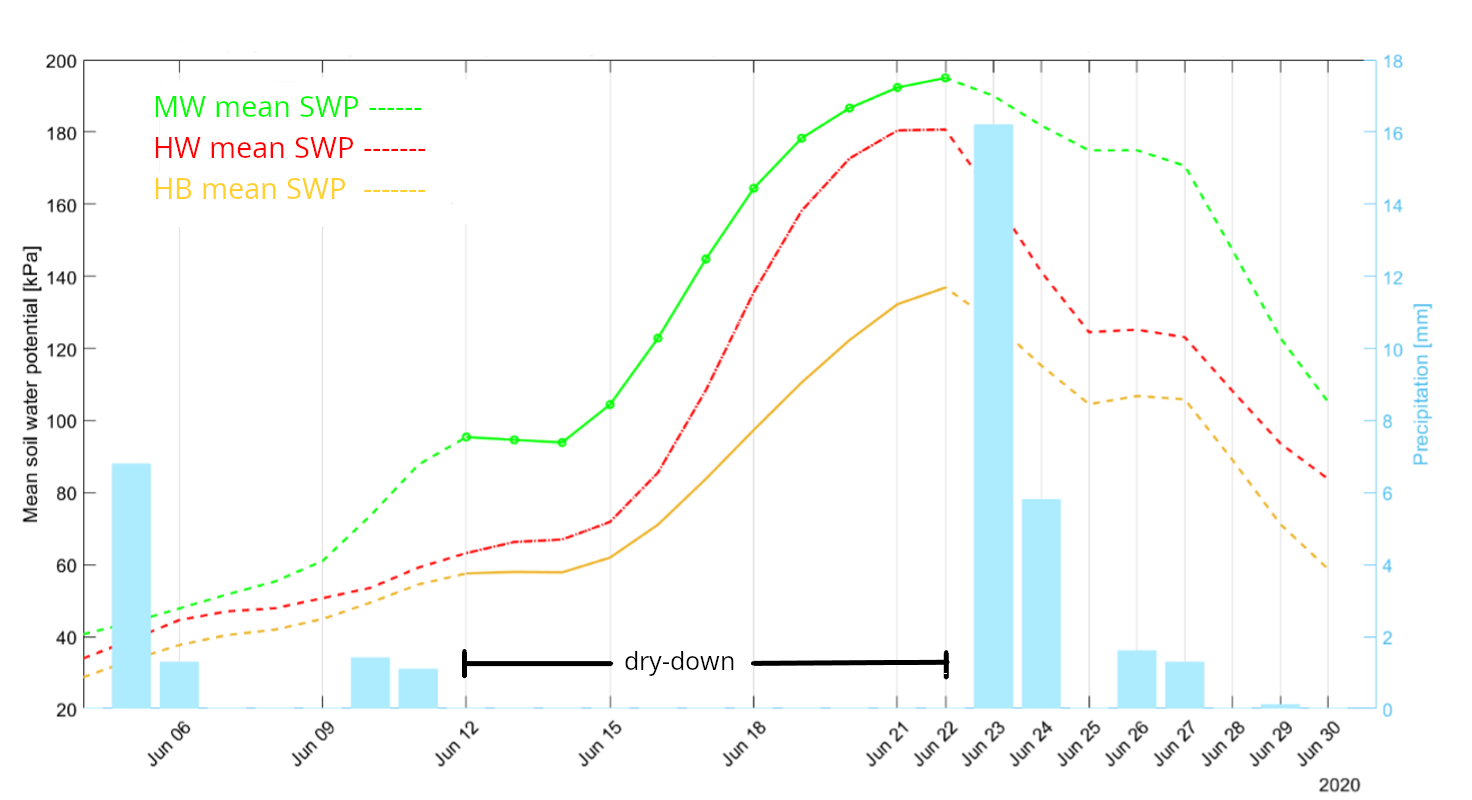
Figure 2: Evolution of the soil water potential [kPa] for maple-fir (MW in green), maple-birch (HW in red), and maple-beech stands (HB in yellow) with daily precipitation in blue.
{15}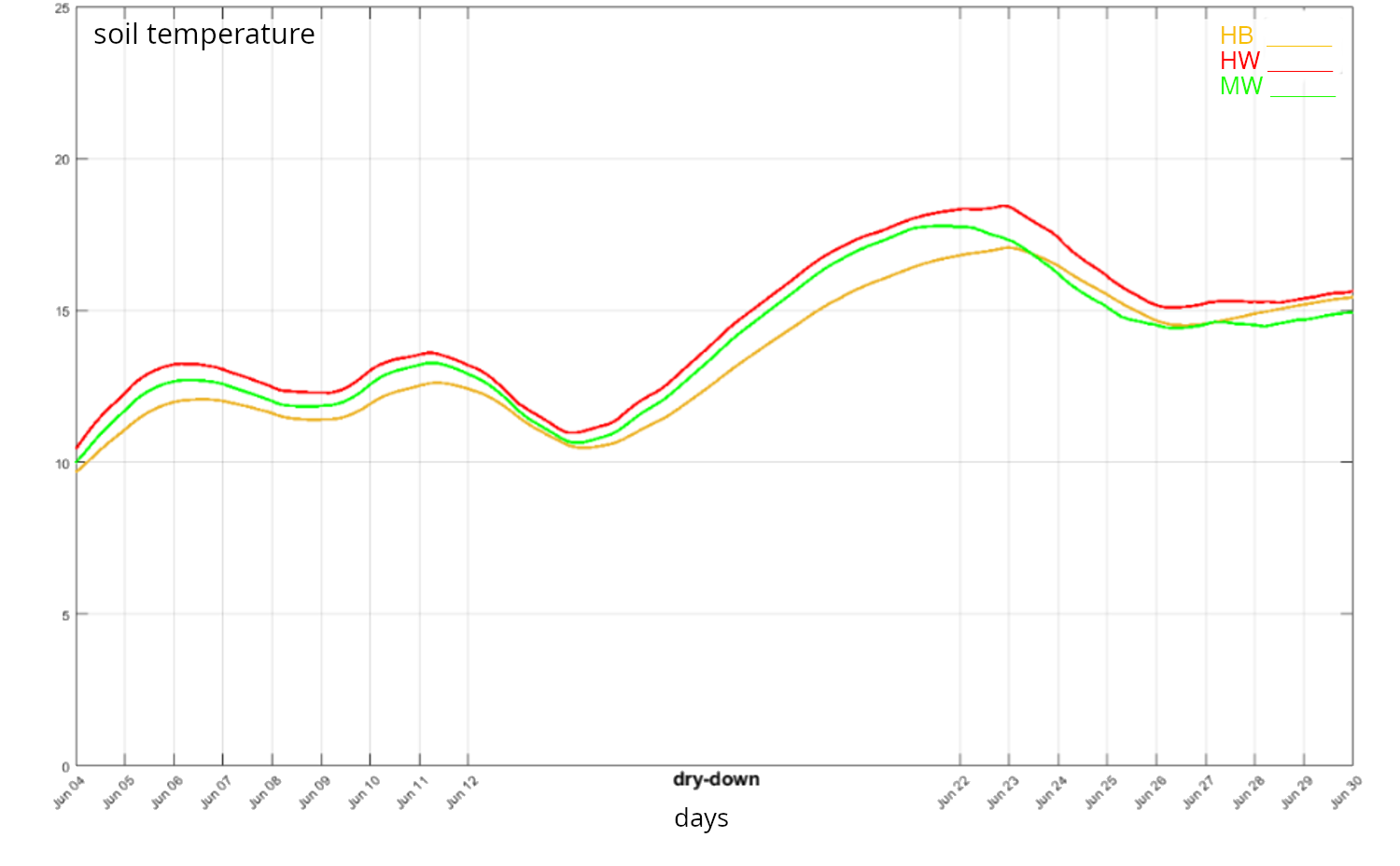
Figure 3: Evolution of the soil temperature [°C] for MW, HW and HB.
{16}Keeping in mind the rolling ball of my earlier example, less ecologically resilient species will switch more easily and quickly to new states. However, it is challenging to characterize these new states. The information transmitted by the collected data allows me to extract part of the reality experienced by trees, although they only provide me with a snapshot at a given time.
{17}In my collaboration with artists Trudel and Cossette, we asked ourselves :how to present this dynamic felt by trees to people other than scientists? How can the dimensional phenomena embedded in data be animated more dynamically? How to visualize tipping points between states of the being (namely, the tree) that allow for becoming [M. Igini, 2023]? The concept of “becoming” carries forth processes of existence as expressed through change and transformation of tipping points, whereby the double dimensionality of data can be a source of inspiration to humans in the context of climate change.
{18}Dimensional renderings of environmental data with digital creativity
{19}I write this segment of the text as an artist, musician, programmer and PhD candidate. My contribution to the collaboration is to provide publics with a new sensory experience of scientifically-validated data about climate change. As discussed in the previous section, our scientific collaborator Courcot uses various forms of graphs and histograms in the analysis of extensive data tables in order to identify patterns that would otherwise be challenging to comprehend solely by examining the numbers. This process of creating plots and graphs is a way of transforming abstract cognitive data into a dimensional sensory experience through shapes and colors. How to make sense of data through sensory means, without relying on extensive knowledge and experience of environmental science? Artists can bring these 2D graphs into time-based animations, as a tipping point between two states, adding a new temporal and evolutive dimension to static imagery. By activating the movement inherent to data sequencing, a sensory experience is offered to publics who are unfamiliar with environmental science. In the following section, we highlight the various approaches of our process to translate scientific data into dynamic and artistic expression, as our goal is to engage with the transformative quality of the thresholds in the data through animations. This process extends the scientific data through movement.
{20}In January 2023 began at Hexagram the initial stage of artistic development using the TouchDesigner software, a specialized program designed to create highly customizable visual synthesis using the Python programming language [Patrik Lechner, 2014; Hexagram, 2023]. I began by parsing the data tables provided by Courcot to extract the data from the American Beech tree. As a starting point for our exploration of this new dataset, I crafted, in collaboration with Trudel, simple graphs using 3D lines that could be observed from various angles. To facilitate a closer examination of the graph, I developed the dimensional concept of a “data window” that moves through the data table over time. Additionally, the window moved through the different stations where the American beeches are planted, highlighting the transformation in the data from Spring to Fall. This “data window” can be adjusted in terms of both its width and speed. This novel method of “zooming in and out” of the data and observing its spatiotemporal movement offers a fresh perspective on the tree’s experience in relation to soil temperature and water availability. It reveals how soil and trees behave in their own dimensional context. Consequently, it formed the foundation of our sensory visualizations.
{21}Throughout multiple iterations, we refined this technique for visualizing the data and presenting the behavior over time and in movement, akin to a choreography: the tree’s dance with(out) water and variations in soil temperatures. Our conceptual focus shifted from the specific value of each data point to their transformations, relations, tipping point, thus highlighting new patterns within and between the data tables: moments of stability and abrupt shifts, as well as recurring patterns over specific time spans.
{22}As the project development progressed until April 2023, we questioned each other about the relevance of the visualizations themselves, and whether they could serve as a key to experiencing the nature of the collected and analyzed data, but without relying heavily on labeling and textual indicators. A pivotal aspect of our creative process was to explore graphical forms and colors, which are often chosen arbitrarily by scientists, and therefore lack inherent meaning for laypeople. In the software, we experimented with diverse visualizations, such as rotating circles, visual feedback, colored lines and dots, simulated cell replication, particle systems, and fractal algorithms. These animations conjured images of tree trunks, microscopic leaf cells, heat and water, tree branches, and roots. In each instance, the numerical data from within the selected data window (period and speed) were employed to control specific system parameters, imparting each visualization with imagery evoking the visualized data.
{23}For the definitive artwork, we selected eight distinct designs by linking them with pertinent data. For example, soil water potential is portrayed using rotating circles with visual feedback to simulate dots moving as a tree trunk and tree-rings (Figure 4), while soil moisture is depicted through a fractal rendering evoking downward-extending roots (Figure 5).
{24}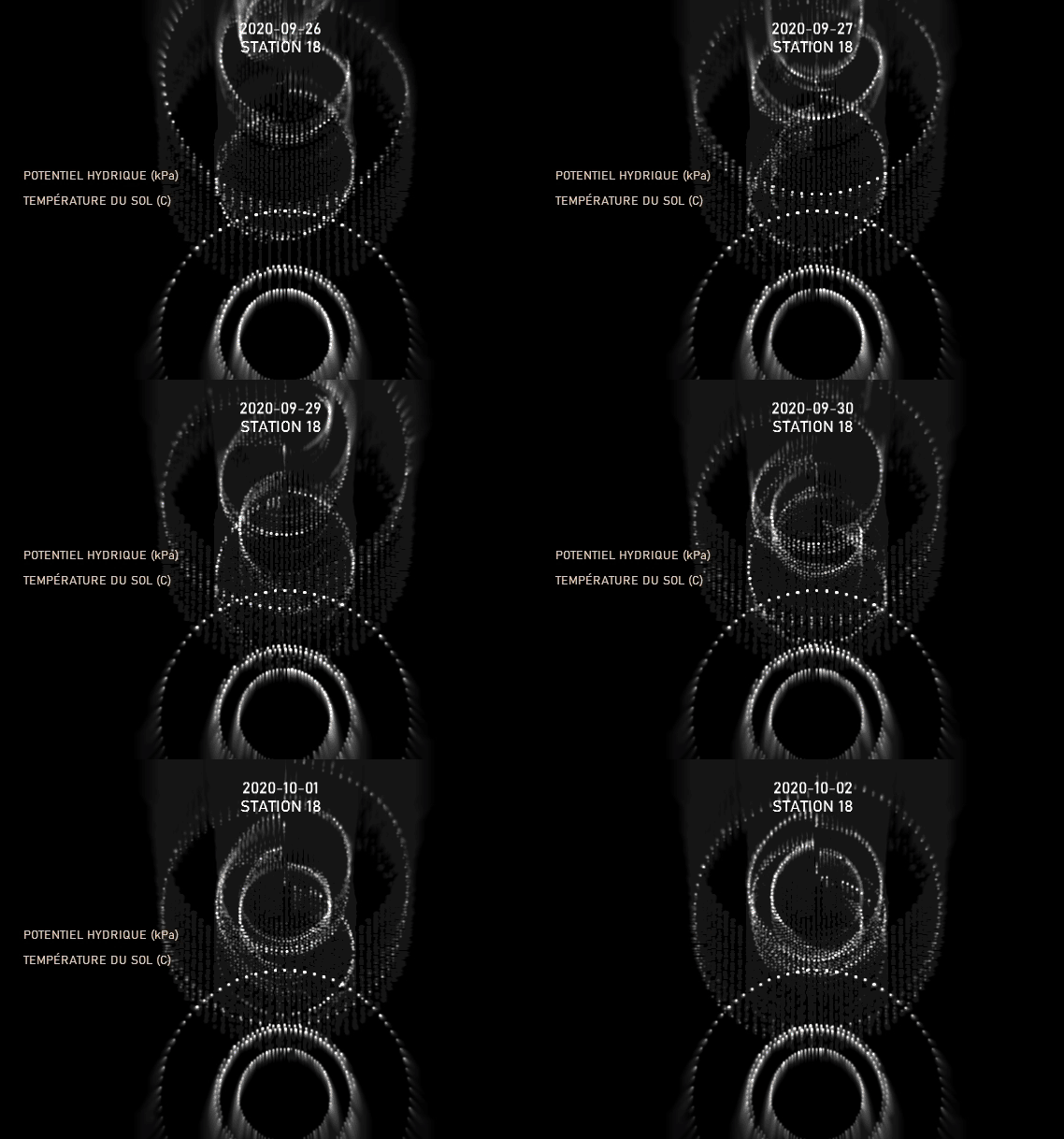
Figure 4: Ælab and MÉDIANE (2023). Devenir-Hêtre [excerpt from TouchDesigner software]. Image sequence shows the particle system as the relation between soil temperature (“température du sol”) and soil water potential (“potentiel hydrique”). In this figure, a tipping point is not visible in the visualization. Credit: Visual programming by Marc-André Cossette.
{25}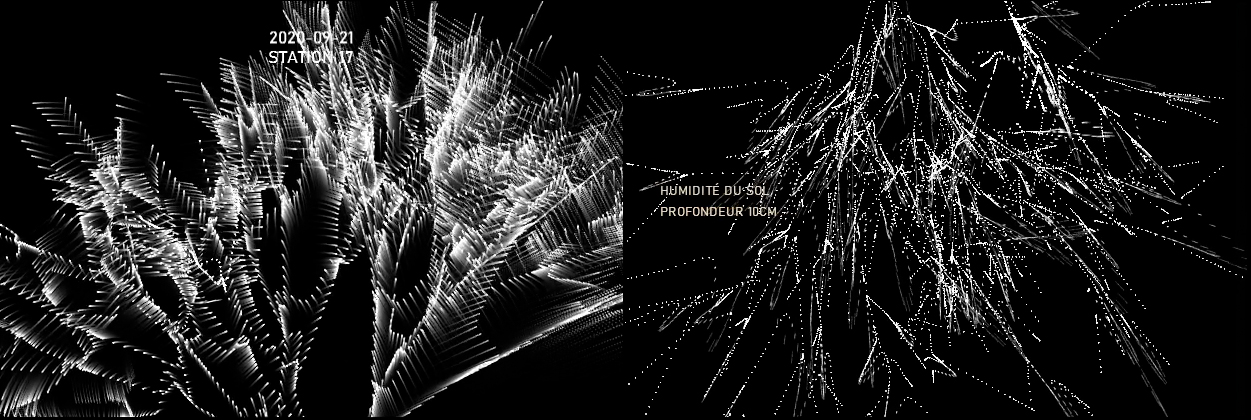
Figure 5: Ælab and MÉDIANE (2023). Devenir-Hêtre [screen capture from TouchDesigner software]. Credit: Visual programming by Marc-André Cossette.
{26}Additionally, daily photosynthesis radiation is driving the replication rate in simulated cells (Figure 6). All these systems moved along with the data window, a condensation of Spring to Fall seasons, six months worth of data transposed into minutes, accelerating the forest’s temporal progression to a pace that publics could sense at a human scale.
{27}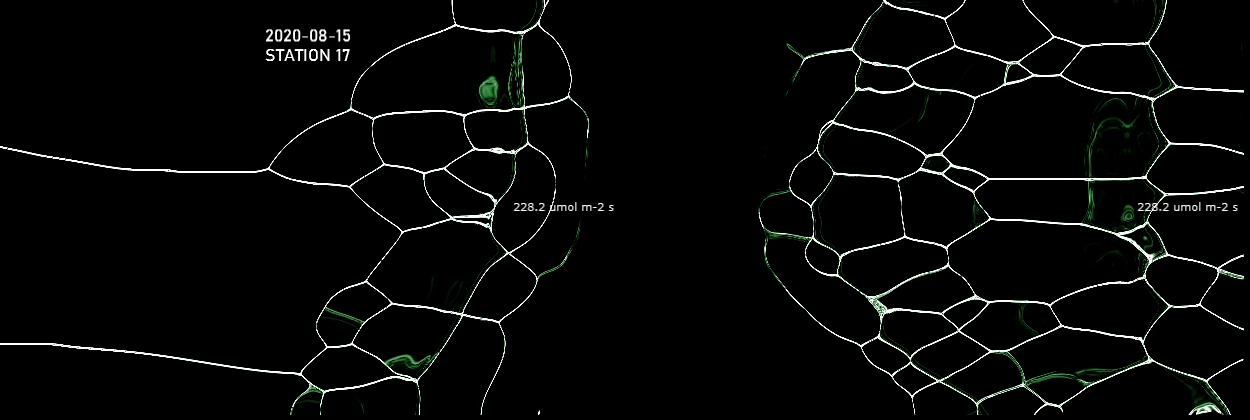
Figure 6: Ælab and MÉDIANE (2023). Devenir-Hêtre [screen capture from TouchDesigner software]. Credit: Visual programming by Marc-André Cossette.
{28}Lastly, a temporal pattern within the data described previously as a flash drought, defined by a sequence of 1000 data points below a specific hydric potential, served as a trigger for visual alterations (Figure 7). Through this technique, the art installation became wholly reliant on the temporal dimension of the data at every level, encompassing the motion of each designed graph as well as the overall arrangement of graphs over an extended period.
{29}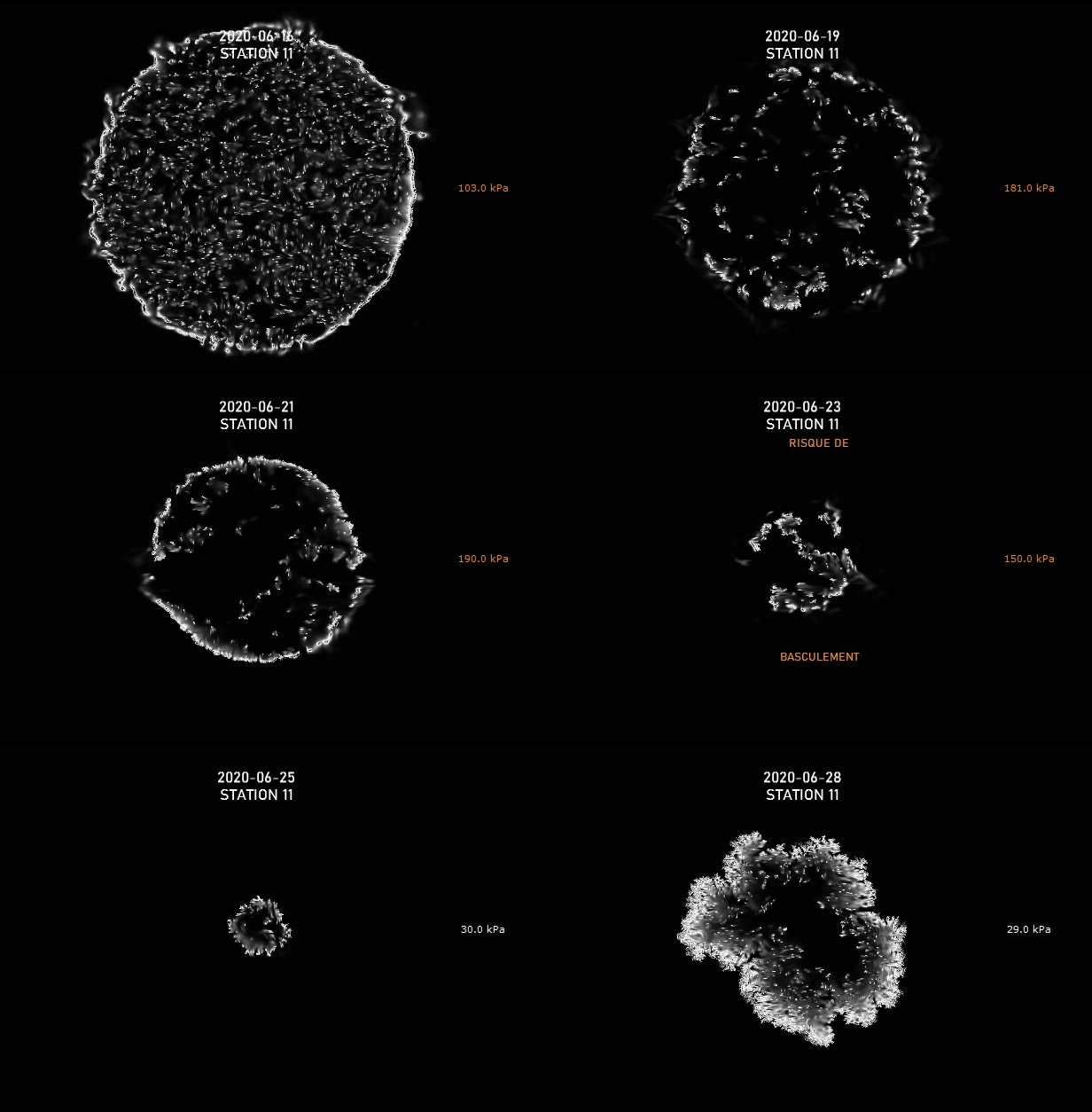
Figure 7: Ælab and MÉDIANE (2023). Devenir-Hêtre [sequence from TouchDesigner software]. Image sequence shows the particle system as the relation between soil temperature and soil water potential. When the words “risque de basculement” appear, it shows a “risk of tipping over” in the relation between the two types of data. Credit: Visual programming by Marc-André Cossette.
{30}Beech’s dimensional resilience experienced in an outdoor art installation
{31}I write this section in my role as artist, professor and principal investigator of MÉDIANE, the Canada Research Chair in Arts, Ecotechnologies of Practice and Climate Change (2020-2025, funded by the Social Sciences and Humanities Research Council of Canada (SSHRC), the Canada Foundation for Innovation (CFI), and the Fonds de recherche du Québec – Société et culture (FRQSC). The Chair’s team of researchers, students, artists and professionals conceptualizes, produces and presents the scientific research of the Smartforests Canada group in yearly outdoor art installations. Smarforests research initiatives are part of a global network of connected forest sensor practices [Jennifer Gabrys, 2016]. The audiovisual artworks consist of computer-controlled LED video tiles, immersive sound and tactile sound, modular synthesizers and various sensors, presented outdoors as an “exhibition-laboratory”. The technical equipment is installed in a scaffolding structure whereby cabling and connections are apparent, along with the effects of weather, other trees and plants, wind and forest creatures. These modular tube structures without walls are akin to practices in contemporary architecture and scientific forest experiments (Figures 8, 9 and 10).
{32}Given the innovative use of temporary scaffolding in building, renovation and emergency situations, the outdoor ephemeral art installations employ the tubes and connectors in each location for distinct site integration, without producing residual matter. The installations are thus conceived as a “construction site”, a physical platform to open and build dialogues between artists, scientists and publics about scientific data in a context of climate change. All structural elements are outside and immediately visible, nothing is hidden behind walls. This includes the promotion of data literacy [David Spiegelhalter, 2019] in order to question what and how data is shown. Publics are curious about how scientists are contributing to climate research, yet many do not often go to museums or galleries to experience art or science. Students were on site to discuss with them and to collect the responses to the semi-directed interview comprising seven questions.
{33}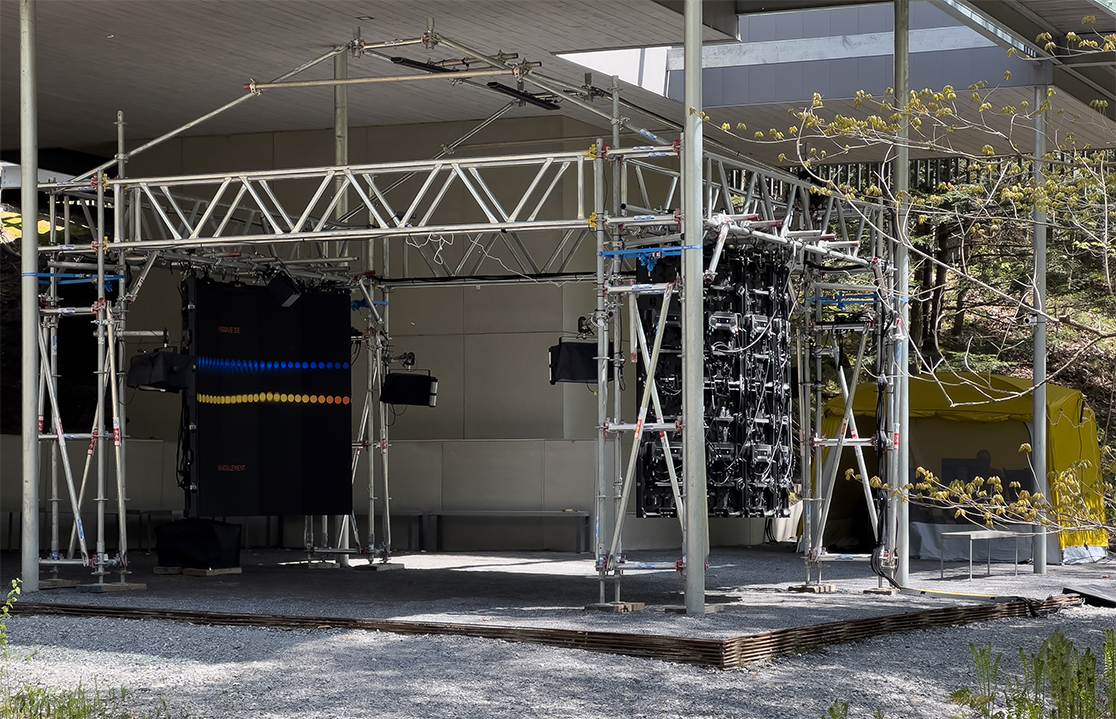
Figure 8: Ælab and MÉDIANE (2023). Devenir-Hêtre [outdoor immersive digital installation]. Fondation Grantham for the Arts and the Environment, Saint-Edmond-de-Grantham, Quebec. A view of the installation. Photo credit: Gisèle Trudel.
{34}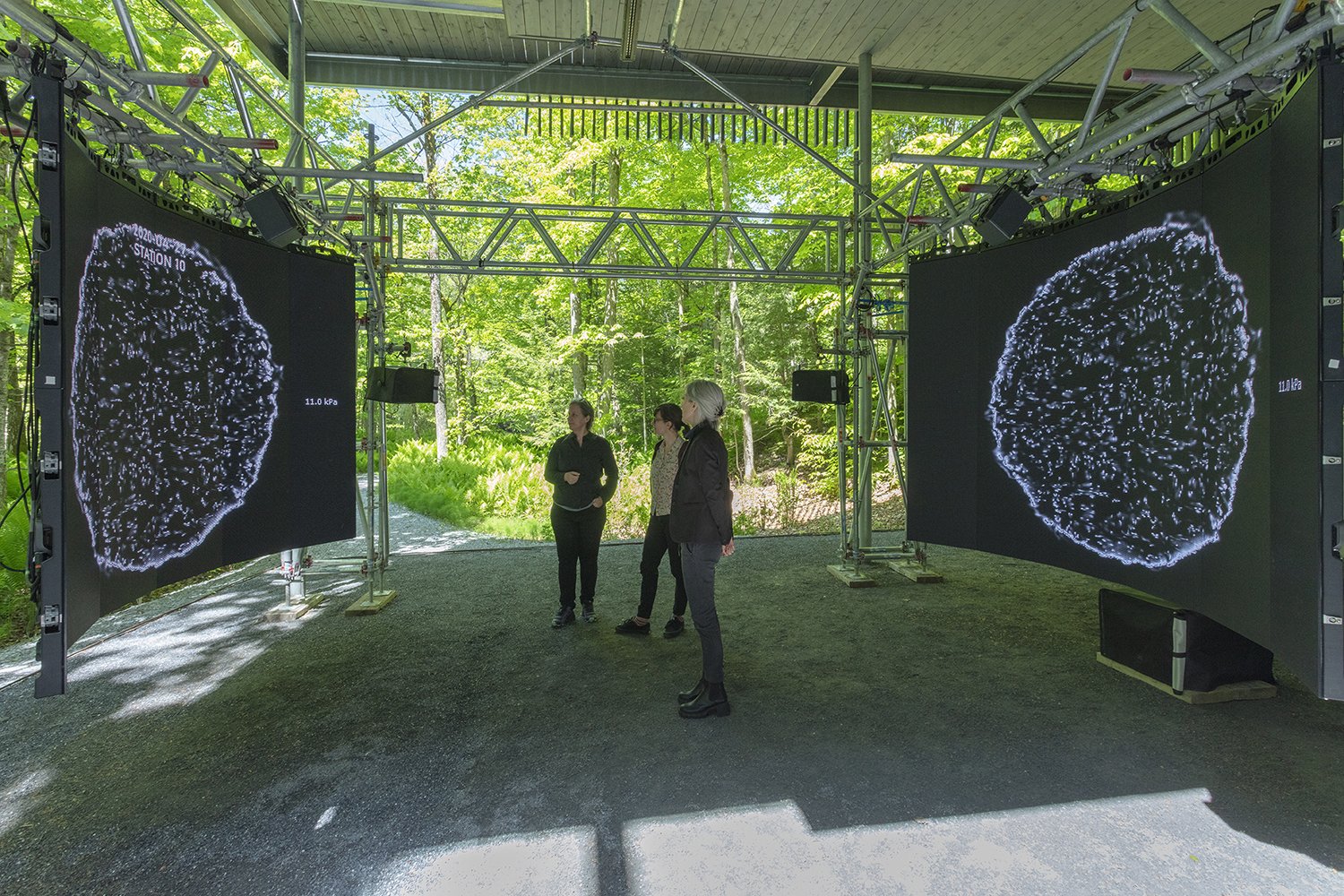
Figure 9: Ælab and MÉDIANE (2023). Devenir-Hêtre [outdoor immersive digital installation]. Fondation Grantham for the Arts and the Environment. The LED video tiles are placed facing in a semi-circle, with surround sound and also a speaker array positioned at the top. Photo credit: Richard-Max Tremblay.
{35}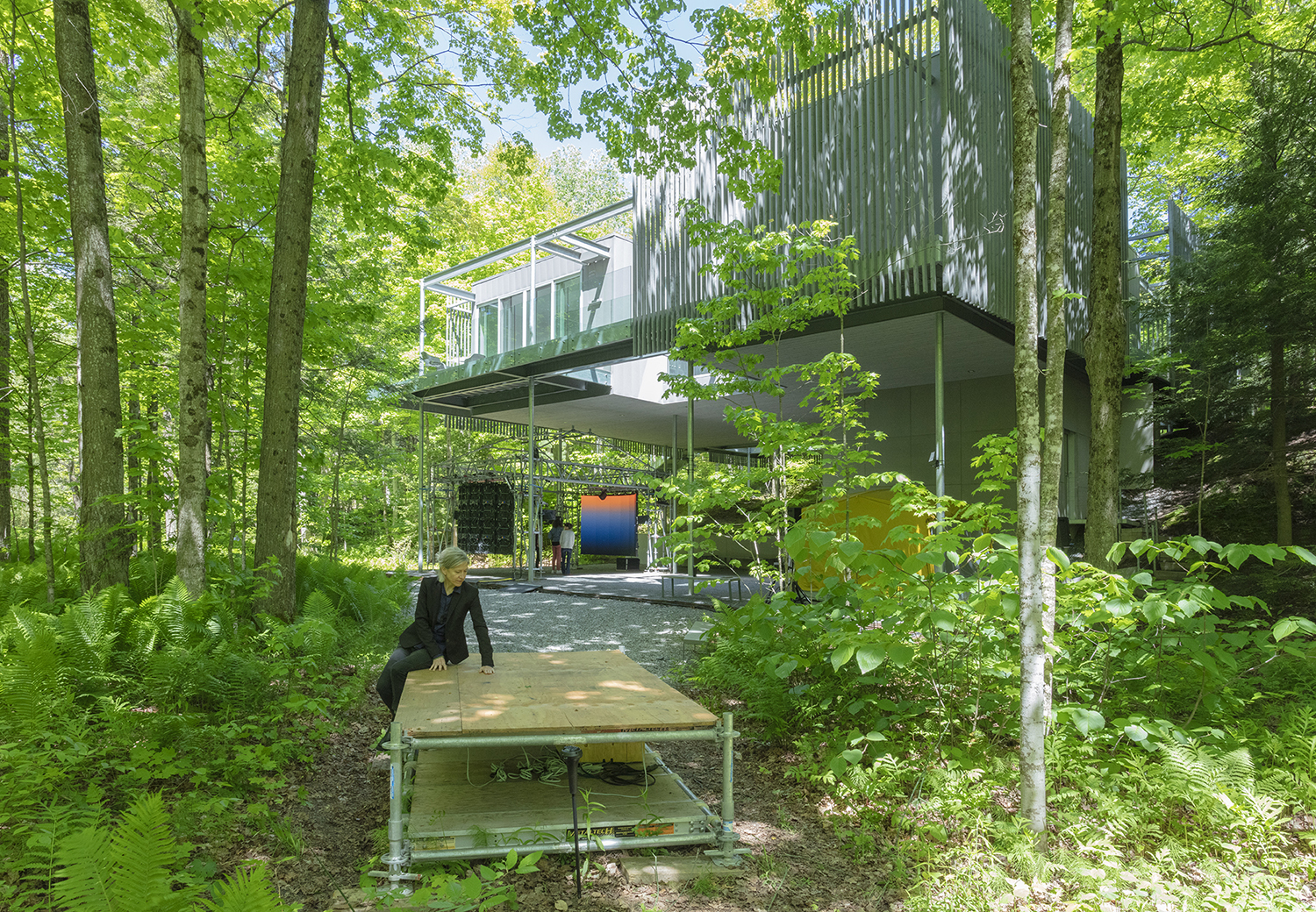
Figure 10: Ælab and MÉDIANE (2023). Devenir-Hêtre [outdoor immersive digital installation]. Fondation Grantham for the Arts and the Environment. In the foreground is as a component of the installation, the “tactile sound” table where people could sit or lie down and receive a “sound massage” from transducers placed under the platform. Photo credit: Richard-Max Tremblay.
{36}MÉDIANE’s third artwork discussed here is entitled Devenir-Hêtre (in English, Beech-Becoming). It took place in May 2023 in a forest at the Fondation Grantham for the Arts and the Environment [Devenir-Hêtre, 2023; Grantham Foundation, 2023]. This location resonates with the Chair’s own objective of interacting with different publics about forests and climate change, enabling fruitful and unprecedented conversations to occur freely, without pressure, previous interests or knowledge. It contributes to the increase in art-science collaborations [M. G. Tosca et al., 2021; N. Li et al., 2023] and contemporary artworks delving into symbiotic relations with trees along with digital media [J. Tingley, 2020-23; R. Smite and R. Smits, 2020; Agnes Meyer-Brandis, 2013].
{37}A tipping point for digital art is the challenge of presenting the installation outdoors, an active involvement in changing climates. The artwork is subjected to the same environmental conditions experienced daily by trees in the cold, rain or heat: the demanding yet exquisite dimensionally felt immediacy of being “on location”. Some of the scientific data studied by Courcot was collected at the Station de biologie des Laurentides (SBL) during the first year of the pandemic in 2020, a time of ecological and social collapse. It is presented three years later in another forest, in another time. Each instance of data presenting the American beech resilience contributes to a dimension of present and future climates, involving publics in new ways to envision, think and live with change, their own and that of another living being, the tree, known for its symbiotic relation of breath with humans. MÉDIANE’s two previous installations took place in urban settings [bois eau métal, 2021; Orée des bois, 2022], respectively in the arboretum of a botanical garden and in an urban community garden of a university campus. Each of the Chair’s collaborations are public forums, adding new dimensions to climate research data based on sensory experiences with digital art. The fourth and final distinct outdoor installation of MÉDIANE will occur in 2024 and will bring the immersive outdoor art/forest science research-creation programme to its conclusion.
{38}Encounters with publics foster the circulation of ideas and creative actions, these elements are gathered on a voluntary basis through anonymous semi-directed interviews comprising seven questions. In May 2023, 300 people visited the Beech-Becoming installation (Figures 10 and 11), 20 participated in the interviews with ages ranging from 8 to 85 years. The number of participants includes 2 groups of 25 people each, counted as two responses, since their answers were recorded collectively. Question no. 4 reads as follows: “In what ways can artists, scientists and publics work together to think and act differently about climate change?” A thematic overview culled exclusively from public responses to the 2023 installation are included here. It brings forward that art plays a crucial role in making complex scientific information more accessible and emotionally engaging. Art can help to demystify science, making the issues of climate change more accessible to wider audiences, even without scientific training. By evoking emotional responses, artistic sensibilities connect people with the tree’s own capacities to change, thus favoring connection between the personal, the collective and the physical milieu that supports life processes. Artists, when collaborating with scientists, bring human and visual expressions to complex concepts into tangible and sensory expression. This helps open up new perspectives on climate issues and break down disciplinary silos. Through installations and participatory works, this art project created an immersive outdoor experience that directly brought people in contact with the reality of stress and response of American beech trees, their surprising resilience to deal with lack of water, under certain conditions. This multidimensional approach brings together diverse perspectives to enrich dialogues. Breaking through preconceptions about lack of knowledge or concern about climate change, the overall data collected from this question of the anonymous interviews confirm the important roles played by trees and that creativity and interdisciplinary efforts are crucial to address pressing environmental issues through openness and collaboration.
{39}In conclusion
{40}The tipping points of the American beech tree, aggravated by lack of water and increasing temperatures of climate change, provide compelling scientific data about this tree’s resilience, which in turn, produces dimensional data renderings with art. The American beech’s “positive stress” dimensions are expressed in numbers, in sequencing this data in time and in its effects on collaborative research and publics. The internal and external dynamics of the American beech tree data are extended in sensory visualizations of its processes through dynamic moving images in an outdoor immersive digital art installation. The scientific project allows for a better understanding of how trees respond to climate change, and gives an insight into how sugar maple forest can adapt to increased temperatures through a companionship with the American beech tree. Another perspective is the development of forest management strategies at the scale of Quebec in a context of increasing water deficits. Opening dialogues about climate change through creativity, the process of writing this text in an interdisciplinary mode is also a move to push through research field boundaries to engage publics who share concerns about climate change. The responses of the semi-directed interviews are in the process of being analyzed in the writing of a series of upcoming articles.
{41}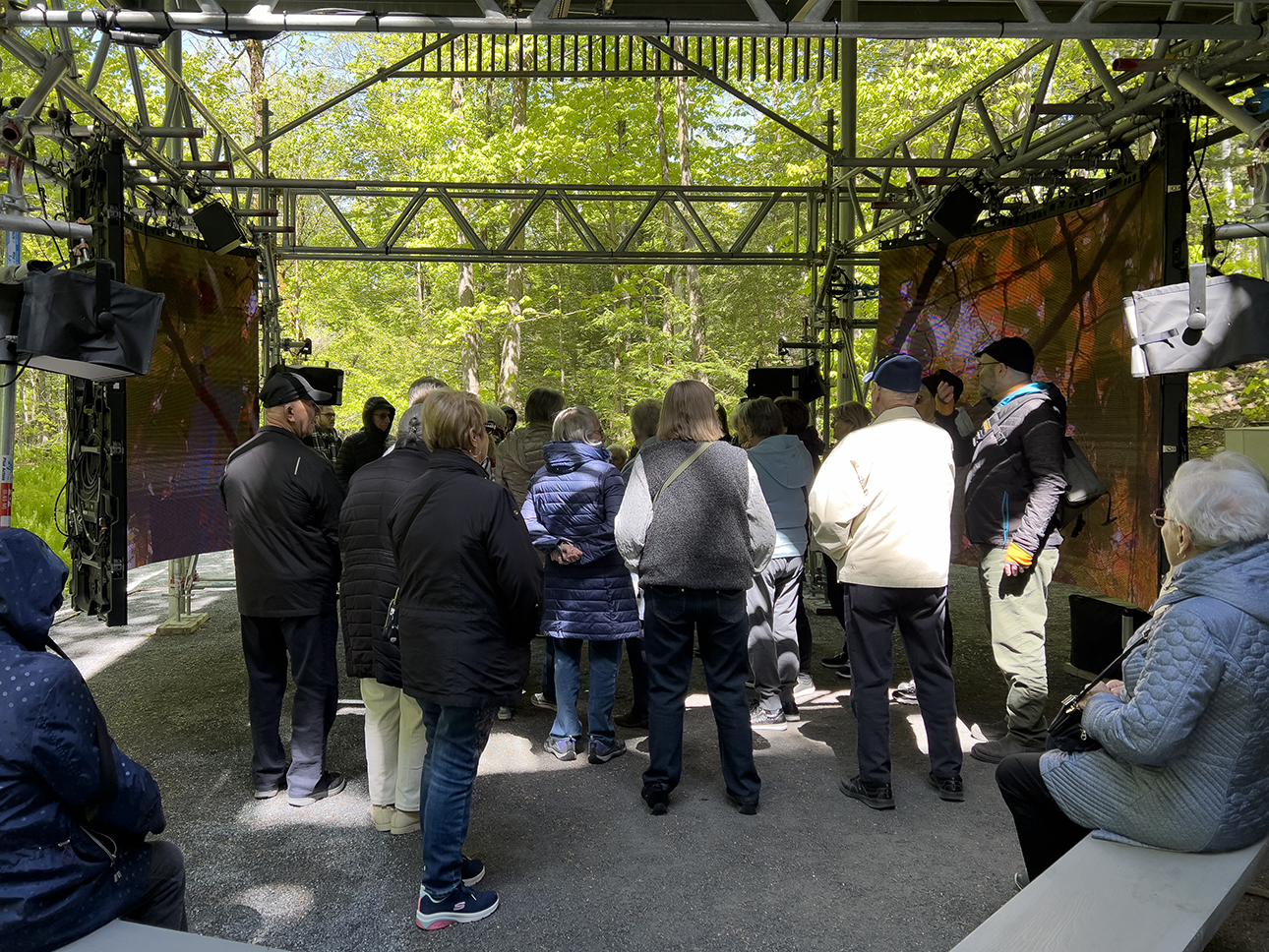
Figure 11: Ælab and MÉDIANE (2023). Devenir-Hêtre [outdoor immersive digital installation]. Fondation Grantham for the Arts and the Environment, Saint-Edmond-de-Grantham, Quebec. Public discussion with a group of elders. Photo credit: Mélodie Claire Jetté.
{42}Photo credits: Cover image Smartforests Canada.
| [1] | Orée des bois: MEDIANE. UQAM. Retrieved (June 2022) from https://mediane.uqam.ca/oree-des-bois/. |
| [2] | N. Bélanger, A. Collin, R. Khlifa and S. Lebel-Desrosiers: Balsam fir and American beech influence soil respiration rates in opposite directions in a sugar maple forest near its northern range limit, Frontiers in Forests and Global Change, vol. 4, 664584, https://doi.org/10.3389/ffgc.2021.664584, 2021. |
| [3] | B. Courcot: Suivi et modélisation du potentiel hydrique du sol dans un contexte de stress climatiques : le cas d’une érablière à bouleau jaune à la marge nordique de sa distribution, Mémoire de maîtrise en technologie de l’information, Université Téluq, 2023. |
| [4] | B. Courcot, N. Bélanger and D. Lemire: L’expansion du hêtre dans l’érablière à bouleau jaune peut-elle s’expliquer par l’entremise du potentiel hydrique du sol ? Aperçu d’une variable inexplorée, in: ACFAS 2023, Colloque 632 : Les érablières dans un environnement en mutation, Université de Montréal, 2023. Retrieved from https://www.acfas.ca/evenements/congres/programme/90/600/632/c. |
| [5] | Devenir-Hêtre: MEDIANE. UQAM. Retrieved (August 2023) from https://mediane.uqam.ca/devenir-hetre/. |
| [6] | DOT-Lab: Data Science Laboratory. Université TELUQ. Retrieved (August 2023) from https://dot-lab.teluq.ca/en/. |
| [7] | Grantham Foundation: Grantham Foundation for the Arts and the Environment. Retrieved (August 2023) from https://www.fondationgrantham.org/en/home. |
| [8] | Jennifer Gabrys: Program Earth. Environmental Sensing Technology and the Making of a Computational Planet. Minnesota University Press, https://doi.org/10.5749/j.ctt1b7x5gq, 2016. |
| [9] | D. Herring: What is an “extreme event”? Is there evidence that global warming has caused or contributed to any particular extreme event?, 2020. Retrieved from https://www.climate.gov/news-features/climate-qa/what-extreme-event-there-evidence-global-warming-has-caused-or-contributed. |
| [10] | Hexagram: Réseau de recherche-création en arts, cultures et technologies. UQAM. Retrieved (August 2023) from https://hexagram.ca/en/. |
| [11] | C. Holling: Engineering resilience versus ecological resilience, 31-43, 1996. |
| [12] | M. Igini: The Tipping Points of Climate Change: How Will Our World Change?, 2023. |
| [13] | F. Kögler and D. Söffker: State-based open-loop control of plant growth by means of water stress training, Agricultural Water Management, vol. 230, https://doi.org/10.1016/j.agwat.2019.105963, 2020. |
| [14] | Patrik Lechner: Multimedia Programming Using Max/MSP and TouchDesigner: A Step-by-Step Guide to Designing, Building, and Refining Immersive Audio-Visual Applications and Performance Environments Using Max and TouchDesigner. Packt Publishing, 2014. |
| [15] | N. Li, I. I. Villanueva, T. Jilk, Matre B. R. Van and D. Brossard: Artistic Representations of Data Can Help Bridge the US Political Divide Over Climate Change, Communications Earth & Environment, vol. 4, 195, https://doi.org/10.1038/s43247-023-00856-9, 2023. |
| [16] | Nate G. McDowell, Gerard Sapes, Alexandria Pivovaroff, Henry D. Adams, Craig D. Allen, William R.L. Anderegg, Matthias Arend, David D. Breshears, Tim Brodribb and co-authors: Mechanisms of woody-plant mortality under rising drought, CO2 and vapour pressure deficit, Nature Reviews Earth and Environment, vol. 3, 294-308, https://doi.org/10.1038/s43017-022-00272-1, 2022. |
| [17] | MEDIANE: Chaire de recherche du Canada en arts, écotechnologies de pratique et changements climatiques. UQAM. Retrieved (August 2023) from https://mediane.uqam.ca/. |
| [18] | Agnes Meyer-Brandis: Have a Tea with a Tree, Artwork (2013) |
| [19] | bois eau métal: MEDIANE. UQAM. Retrieved (July 2021) from https://mediane.uqam.ca/installation/. |
| [20] | J. A. Otkin, M. Svoboda, E. D. Hunt, T. W. Ford, M. C. Anderson, C. Hain and J. B. Basara: Flash droughts: A review and assessment of the challenges imposed by rapid-onset droughts in the United States, Bulletin of the American Meteorological Society, vol. 99, 911-919, https://doi.org/10.1175/BAMS-D-17-0149.1, 2018. |
| [21] | C. Pappas, N. Bélanger, Y. Bergeron, O. Blarquez, H. Y. H. Chen, P. G. Comeau, Grandpré L. De, S. Delagrange, A. DesRochers and co-authors: Smartforests Canada : A Network of Monitoring Plots for Forest Management Under Environmental Change, 521-543, https://doi.org/10.1007/978-3-030-80767-2_16, 2022. |
| [22] | SBL: Station de biologie des Laurentides. Université de Montréal in Saint-Hippolyte. Retrieved (August 2023) from https://sbl.umontreal.ca/accueil/. |
| [23] | Smartforests: Smartforests Canada. UQAM. Retrieved (August 2023) from https://smartforest.uqam.ca/. |
| [24] | R. Smite and R. Smits: Atmospheric Forest, Artwork (2020) |
| [25] | David Spiegelhalter: The Art of Statistics: Learning from Data. Basic Books, 2019. |
| [26] | S. Stevenson, S. Coats, D. Touma, J. Cole, F. Lehner, J. Fasullo and B. Otto-Bliesner: Twenty-first century hydroclimate: A continually changing baseline, with more frequent extremes, Proceedings of the National Academy of Sciences, vol. 119, 1-9, https://doi.org/10.1073/pnas.2108124119, 2022. |
| [27] | J. Tingley: The Foresta-Inclusive, Artwork (2020-23) |
| [28] | M. G. Tosca, A. Galvin, I. Gilbert, K. L. Walls, G. E. Tyler and A. M. Nastan: Reimagining Futures: Collaborations Between Artists, Designers, and Scientists as a Roadmap, Elementa: Science of the Anthropocene, vol. 9(1), 00016, 2021. |
